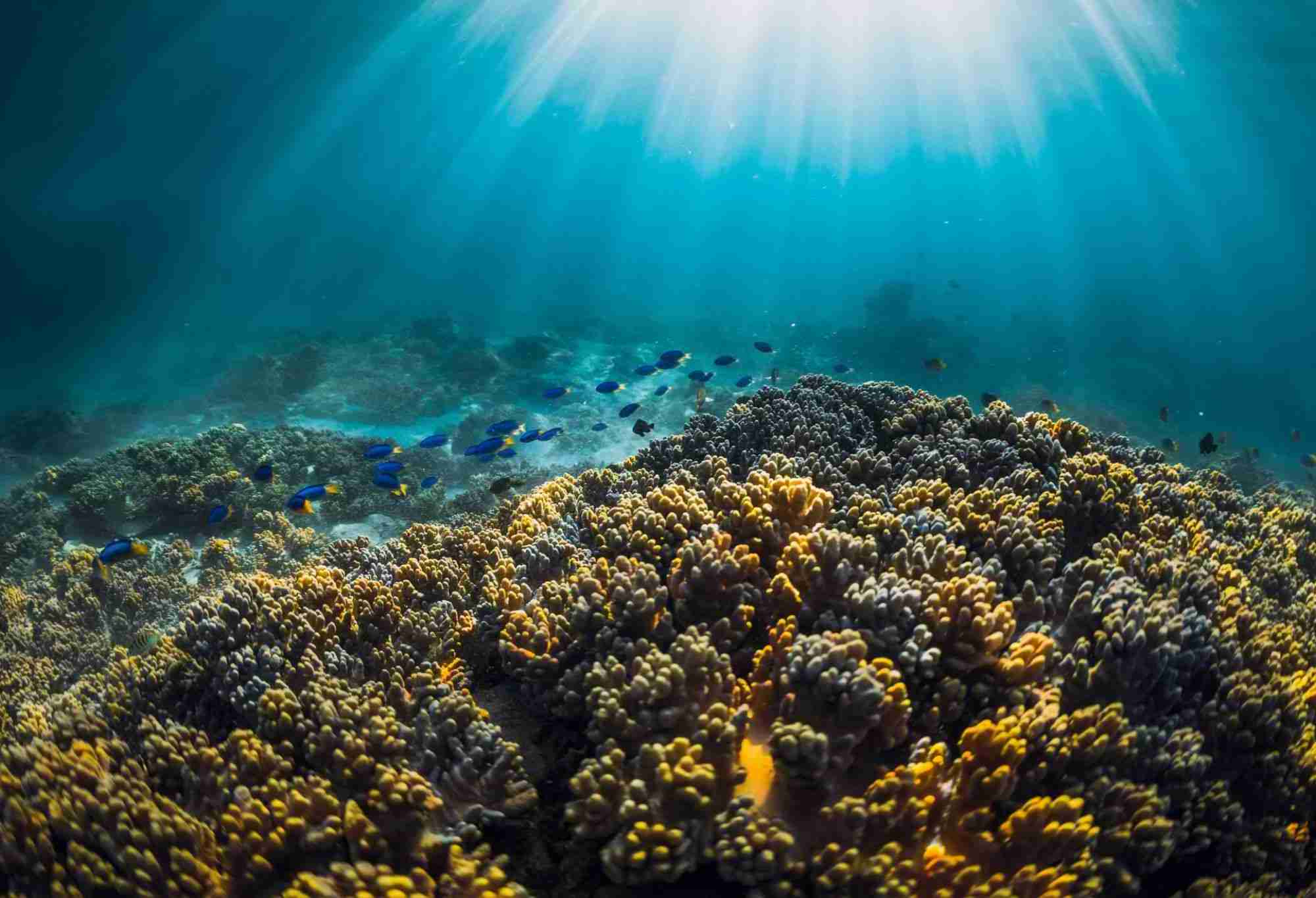
In commemoration of this upcoming Earth Day…
There is a quiet truth we move through each day without fully seeing: every step we take rests on a world that has carried life longer than memory, longer than language, longer than the idea of “us” itself. Before names, before borders, before even the first story told around a fire, there was Earth—already ancient, already alive in ways we are only beginning to understand.
This planet has been the home to every living thing that has ever existed. Every ancestor you have—those you can name, and the countless more whose names dissolved into time—once stood on this same ground, breathed this same air, looked up at this same sky. The dust beneath your feet holds the quiet remnants of entire lineages, entire worlds that rose and vanished without record. And yet, nothing is truly lost. It transforms, it cycles, it becomes something else.
Scientifically, we know this as continuity—matter rearranging, energy flowing, life adapting. The oxygen in your lungs was once released by ancient cyanobacteria in oceans that no longer exist in their original form. The calcium in your bones may have been part of a coral reef millions of years ago. The water you drink has passed through glaciers, rivers, clouds, and countless living bodies before reaching you. There is no clean separation between you and the world you inhabit. You are not standing on Earth—you are an expression of it.
And still, somehow, we forget.
We forget the struggle that made all of this possible. Life did not arrive gently—it persisted. It endured mass extinctions, shifting continents, volatile climates, and the quiet, constant pressure of survival. Every organism alive today carries the imprint of that struggle, the result of unbroken chains of survival stretching back to the very first cells.
But survival alone does not tell the whole story.
There is also care.
There is a mother guarding her offspring, often at great cost to herself. There are siblings learning, competing, cooperating in ways that shape their futures. There is the quiet language of connection—of bonds formed not just for survival, but for continuity. Across species, across ecosystems, there is a pattern: life does not only compete, it collaborates.
Forests communicate through networks beneath the soil, sharing nutrients and signals. Coral reefs—vast, living structures—are built on symbiosis, a partnership so intimate that neither organism could exist in the same way without the other. Even within your own body, trillions of microorganisms live alongside your cells, forming a balance that sustains your health. Cooperation is not an exception in nature—it is a rule.
There is a kind of uniformity in all of this—not sameness, but a shared design. A continuity of process. The same genetic language written in different forms, the same cycles repeating at different scales. From cells to ecosystems, from individual lives to entire species, there is a rhythm that binds everything together.
And yet, despite this profound inheritance, we often struggle to appreciate it.
Perhaps it is because the scale is too vast. How do you hold billions of years in your mind? How do you feel the weight of a history that stretches beyond imagination? It is easier, maybe, to narrow our focus—to think in terms of years, of lifetimes, of immediate concerns. But in doing so, we risk missing the quiet miracle unfolding around us at every moment.
A tree is not just a tree. It is a living record of sunlight, soil, water, and time. An ocean is not just water It is a dynamic system that has shaped climate, chemistry, and life itself. Even the air, invisible and easily ignored, is a delicate balance maintained by countless interactions between organisms across the planet.
We inherit all of this without asking. We are born into it, sustained by it, and ultimately returned to it.
Earth Day is, at its core, a reminder. Not just to protect the environment in some distant, abstract sense, but to recognize what we are part of. To pause long enough to see that this is not simply a place we live—it is the only home any of us have ever known, or will ever know.
There is something humbling in that realization. And something deeply human.
Because if we allow ourselves to really feel it—to understand that the story of Earth is our story—then care becomes less of an obligation and more of a natural response. You do not protect something separate from you in the same way you protect something you know you belong to.
We belong to this.
To the long arc of time that brought us here. To the quiet systems that sustain us without recognition. To the countless lives—past and present—that make our own existence possible.
So as this Earth Day approaches, let it not pass as just another date on a calendar. Step outside. Notice something you would normally overlook—the movement of water, the persistence of a plant, the presence of another living thing sharing the same space as you. Let yourself feel the weight and wonder of it.
And then act.
Care for what is close to you, right where you stand. Lessen the harm that falls within your reach. Give voice to what cannot speak. Stand with the systems—natural and human—that protect and restore what has been diminished. These acts may seem small, but they are not isolated. Like everything else on this planet, they are connected.
And in that connection, they matter.

