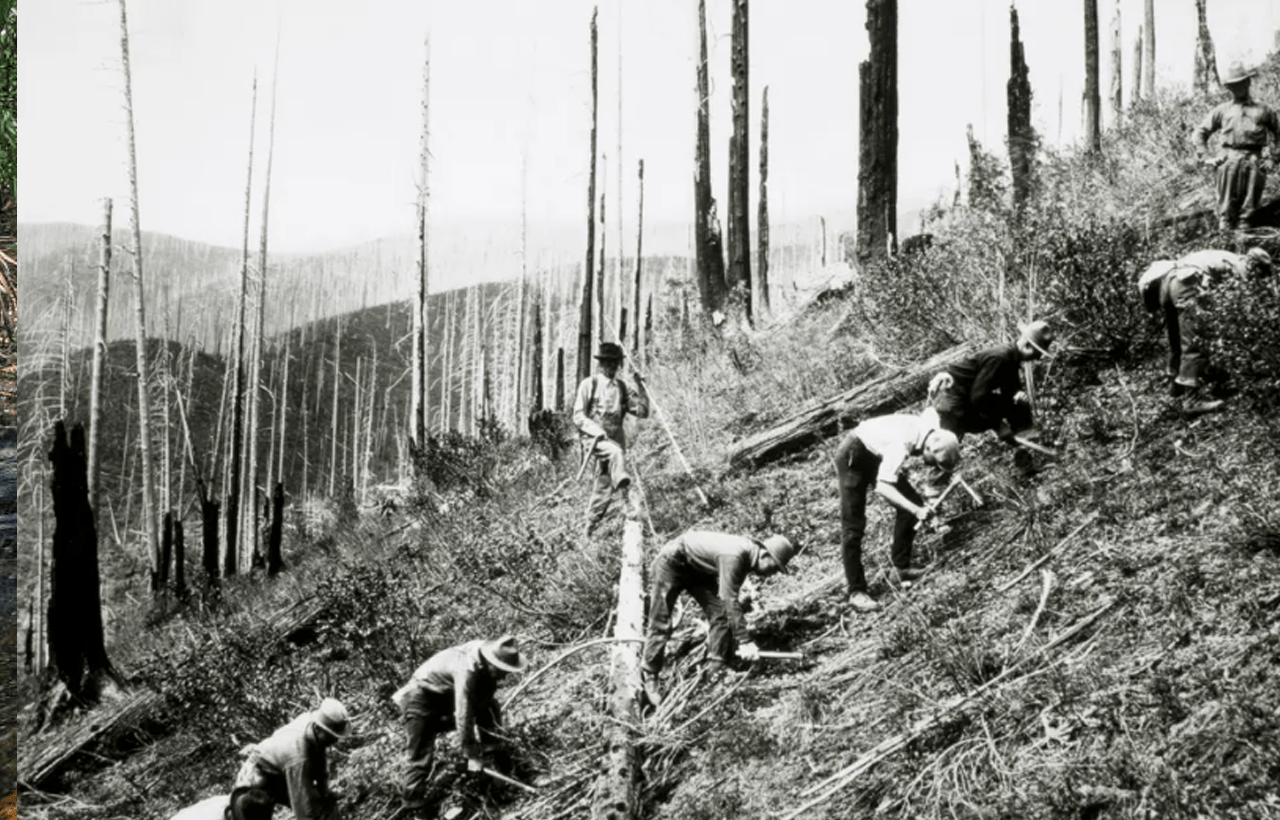
In 1933, the United States was in the grip of the Great Depression. Millions were out of work, and many of the country’s natural resources had been badly depleted by overuse, deforestation, soil erosion, and drought. In response, President Franklin D. Roosevelt launched a series of ambitious New Deal programs—among them, the Civilian Conservation Corps (CCC), a unique federal initiative that combined environmental restoration with economic relief. The CCC would go on to become one of the most impactful conservation programs in American history.
A Nationwide Effort to Reclaim Land and Livelihood
Over the course of its existence from 1933 to 1942, the CCC mobilized more than 2.5 million young men, primarily between the ages of 18 and 25. These individuals were enrolled in camps spread across all 48 states and several U.S. territories. At its peak, the CCC operated nearly 2,600 camps simultaneously.
The work was physically demanding but highly purposeful. Crews engaged in a wide variety of public land projects: planting trees, halting soil erosion, constructing firebreaks, draining swamps to prevent malaria, and building roads and park infrastructure. For many of the participants, it was their first exposure to structured work, healthy living conditions, and life beyond urban poverty or rural isolation. (britannica.com)
Conservation with Scientific Roots
Although conservation science was still developing in the 1930s, the CCC embraced an applied approach to ecology and land management. Forestry practices, erosion control, and reforestation efforts were informed by the best available knowledge at the time, often guided by scientists from the U.S. Forest Service, National Park Service, and Soil Conservation Service. In fact, the CCC helped popularize the idea that environmental degradation and economic hardship were connected—and that land restoration could be a viable path toward economic recovery.
These efforts were not just stopgaps; they laid the foundation for a more sustainable relationship with the American landscape.
Transforming America’s Public Lands
The CCC had a profound and enduring impact on America’s public spaces. The corps planted nearly 3 billion trees, created or improved hundreds of state and national parks, and developed thousands of miles of hiking trails, fire lookouts, and roads. Much of the infrastructure built by the CCC remains in use today.
Their work protected over 20 million acres from erosion and improved access to natural spaces for millions of Americans. Some of the most well-known national and state parks—including Shenandoah, Great Smoky Mountains, and Everglades National Parks—bear the unmistakable stamp of CCC labor. (npca.org)
Social and Economic Impact
The economic impact of the CCC was significant. Enrollees received $30 per month, with $25 sent home to their families. This money provided crucial support during a time of widespread financial instability. The program also emphasized education, offering classes in reading, writing, and technical trades such as carpentry and surveying.
Beyond wages and education, the CCC fostered a sense of discipline, responsibility, and civic pride. For many participants, it was a transformative experience that shaped their attitudes toward work, community, and the environment.
A Lasting Legacy
Although the CCC was disbanded in 1942 as the nation shifted its focus to World War II, its legacy endures. The program demonstrated that conservation and economic recovery need not be mutually exclusive. It showed that large-scale government initiatives could be both socially responsible and environmentally effective.
Today, the idea of a modern CCC continues to inspire new proposals aimed at combating climate change, addressing youth unemployment, and revitalizing public lands. Programs such as AmeriCorps, state-level conservation corps, and even climate-related service corps initiatives have drawn from the CCC’s blueprint—emphasizing hands-on conservation, public service, and employment.
The Civilian Conservation Corps was more than a jobs program. It was a pioneering effort in land stewardship, workforce development, and public investment in the environment. Its projects helped heal the American landscape during one of its darkest times, leaving behind a legacy of resilience, restoration, and renewal that still shapes our relationship with nature today.
 IPSA SCIENTIA POTESTAS EST