
“It has been theorized that humans are susceptible to self-deception because most people have emotional attachments to beliefs, which in some cases may be irrational. Some evolutionary biologists, such as Robert Trivers, have suggested that deception plays a significant part in human behavior, and in animal behavior, more generally speaking. One deceives oneself to trust something that is not true as to better convince others of that truth. When a person convinces her or himself of this untrue thing, s/he better mask the signs of deception.”
These observations arose during a 2012 exchange I had with a presuppositional apologist, Sye TenBruggencate.
What follows are the central claims he advanced, along with my responses.
Sye Rejects Randomness in Nature
This position is demonstrably incorrect.
Probability plays a fundamental role in many natural processes. Numerous patterns in nature exhibit stochastic—or random—behavior, particularly when outcomes cannot be predicted with certainty. Importantly, randomness does not imply a violation of physical law. Consider rolling a football down a mountainside: its precise path is unpredictable, yet gravity ensures that it will travel downhill. The ball will not suddenly levitate or transform into a bird; it remains constrained by natural forces. One may repeat this experiment endlessly, but the exact trajectory will remain unknowable in advance.
Randomness in Physics
Several mainstream interpretations of quantum mechanics hold that certain microscopic phenomena are objectively random. Even when all causally relevant parameters are controlled, aspects of experimental outcomes vary probabilistically. For example, an unstable atom placed in a controlled environment will decay at an unpredictable moment; only the likelihood of decay within a given time interval can be calculated.
Brownian motion—also known as pedesis—describes the erratic movement of particles suspended in a fluid due to collisions with rapidly moving molecules. While these motions appear chaotic, they can be modeled mathematically and analyzed statistically.
Chaos theory further complicates simplistic notions of order and disorder. Under specific conditions, deterministic systems can produce patterns that appear random, turbulent, and unpredictable. Yet beneath this apparent disorder lies an underlying mathematical structure—regularities that emerge across many systems governed by similar rules.
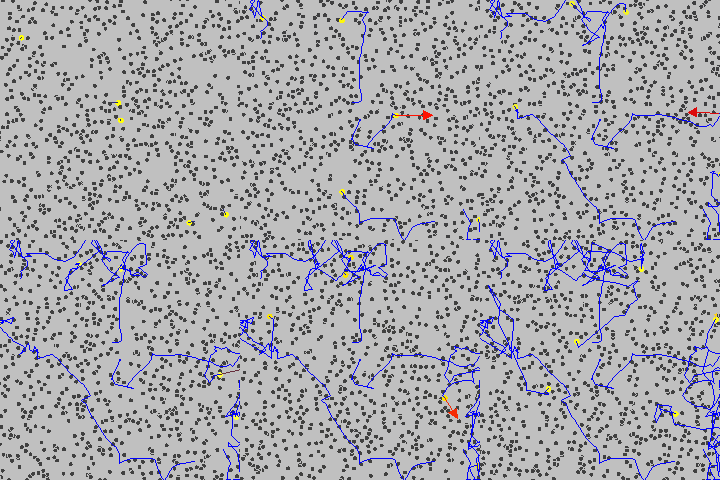
Brownian motion, courtesy Wikipedia
Randomness in Biology
The modern evolutionary synthesis attributes biological diversity to natural selection acting upon genetic variation—much of which arises through random mutation. While mutation itself is stochastic, the process of natural selection is emphatically not: advantageous traits are disproportionately preserved because they improve survival and reproduction.
Genetic drift provides another example of randomness in living systems. In finite populations, allele frequencies fluctuate simply because reproduction involves chance. Over many generations, such fluctuations can lead populations to diverge genetically, sometimes resulting in the fixation—or complete loss—of particular variants.
Population bottlenecks further illustrate the role of contingency in evolution. When environmental catastrophes drastically reduce population size, genetic diversity may be lost purely by chance, reshaping future evolutionary trajectories.
Randomness is also advantageous at the behavioral level. Insects, for instance, often fly in erratic patterns, making it difficult for predators to anticipate their movements.
Other familiar examples abound: cancers may arise from spontaneous copying errors during cell division; fertilization depends on chaotic fluid dynamics; freckles appear in unpredictable distributions despite genetic influences; galaxies remain bound by gravity while the positions of individual stars vary widely. The natural world is permeated with probabilistic processes operating within lawful constraints.
It is also worth noting that Mr. TenBruggencate has no professional background in statistical analysis within physics or biology.
As Douglas Hofstadter once wrote:
“It turns out that an eerie type of chaos can lurk just behind a façade of order—and yet, deep inside the chaos lurks an even eerier type of order.”
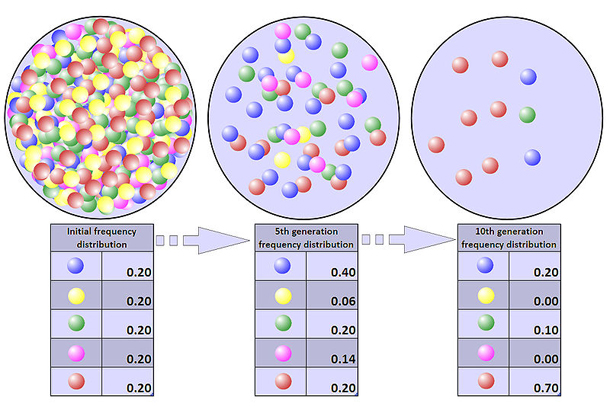
Population bottleneck: A population bottleneck is when a population contracts to a significantly smaller size over a short period of time due to some random environmental event. (Macmillan Genetics)
“It turns out that an eerie type of chaos can lurk just behind a facade of order – and yet, deep inside the chaos lurks an even eerier type of order” -Douglas Hostadter
Uniformity of Nature and Biblical Miracles
Mr. TenBruggencate argues that science depends upon the principle of induction—often summarized as the “uniformity of nature”—and that such uniformity cannot be justified without invoking God.
Yet this claim undercuts his own position.
If nature’s behavior ultimately depends on the discretionary intervention of a supernatural agent, then experimental science would lose its predictive foundation. Scientific inquiry presupposes that the same conditions will reliably produce the same outcomes. A universe governed by frequent divine suspensions of physical law would render experimentation futile.
I never rejected uniformity. I pointed out that natural systems can include probabilistic elements while still exhibiting stable regularities—an idea entirely compatible with thermodynamics, entropy, and statistical mechanics.
Ironically, if one defines uniformity as the expectation that the future will resemble the past under identical conditions, then supernatural miracles—events that override natural law—become logically incompatible with that definition. One cannot simultaneously insist on strict uniformity while appealing to routine violations of physical causality.
Word Games and Shifting Definitions
On Truth
Few would deny the existence of objective truth. Even the claim “there is no absolute truth” is itself presented as an absolute statement.
However, human understanding of truth is often provisional. Our confidence in a claim grows as supporting evidence accumulates. We consider “the Earth orbits the Sun” true because extensive observations confirm it; we reject “the Earth is flat” because all credible models contradict it.
Historically, flat-Earth views were once widely accepted, reminding us that scientific knowledge evolves. Science refines truth through systematic observation, experimentation, and revision—not dogma.
On Facts and Theories
Facts are confirmed observations; they describe what happens. Theories explain why it happens.
A scientific theory is not a guess—it is a coherent explanatory framework grounded in evidence and repeatedly tested against reality. Evolution by natural selection qualifies precisely because it integrates fossils, genetics, embryology, anatomy, and biogeography into a unified account of biological change.
For that reason, evolutionary theory aligns far more closely with empirical truth than literalist creation narratives, which fail scientific scrutiny.
Avoiding Biology
Throughout our discussions, Mr. TenBruggencate repeatedly evaded engagement with evolutionary biology—at one point claiming that evolution has “nothing to do with nature,” a statement so astonishing that it scarcely requires rebuttal.
Evolution is the organizing principle of modern biology. It explains population change, adaptation, speciation, and the deep history of life on Earth. Any serious discussion of nature that excludes evolutionary mechanisms is fundamentally incomplete.
His reluctance to engage with these topics appeared less philosophical than strategic: evolutionary theory poses challenges to his worldview that he seemed unwilling—or unable—to confront.
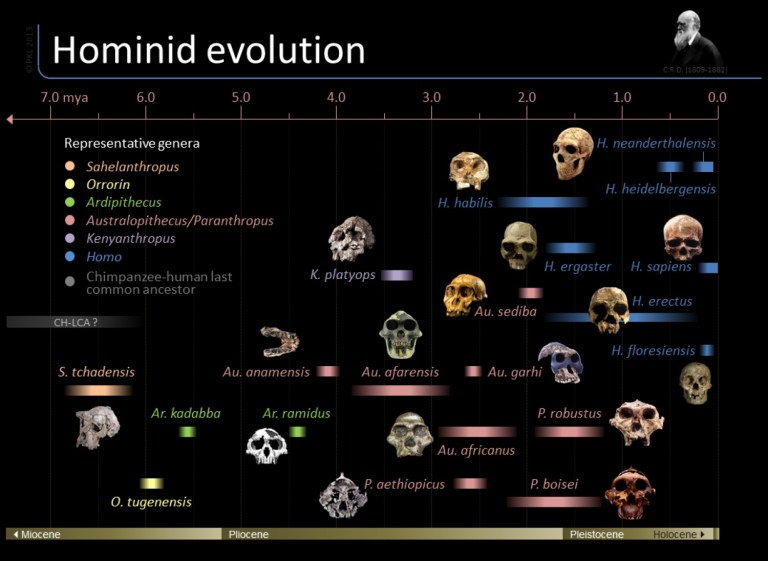
Courtesy of NCSE
Credibility and Conduct
In my experience, Mr. TenBruggencate relied heavily on circular reasoning, semantic ambiguity, and rhetorical evasion. He dismissed evidence, avoided substantive questions, and treated debate as performance rather than inquiry.
What troubled me more, however, was his conduct outside philosophical argument: mocking comments on public threads, recording private conversations without consent, threatening publication of communications, and persistent harassment through social media ultimately led me to block him.
A Word of Advice
If Mr. TenBruggencate approaches you for debate, I recommend declining.
My mistake was assuming mutual interest in rational exchange. What followed instead was weeks of unproductive engagement that seemed aimed less at dialogue than at self-promotion within apologetic circles.
Debating him is, in my view, a one-sided affair and a poor use of time.
Proceed at your own risk—and bring aspirin.
Tommy R
 IPSA SCIENTIA POTESTAS EST